Understand Your Risk
Four cornerstones of modern cardiovascular risk assessment, with patient-friendly and clinician-oriented detail throughout.
PREVENT Score
An updated risk calculator (AHA, 2023) that estimates 10-year — and optionally 30-year — risk of an atherosclerotic cardiovascular disease event.
The PREVENT score combines your age, blood pressure, cholesterol, kidney function, diabetes status, and other factors to estimate your chance of having a heart attack or stroke in the next 10 years.
| 10-yr Risk | Tier | Treatment Guidance |
|---|---|---|
| < 3% | Low risk | Lifestyle focus — diet, activity, weight, tobacco cessation. |
| 3% to < 5% | Borderline | Reasonable to consider starting lipid-lowering medication. |
| 5 – 10% | Intermediate | Lipid-lowering medication recommended. |
| > 10% | High risk | Medication strongly recommended; intensify lifestyle measures. |
The treatment guidance above applies to primary prevention — people with no prior history of ASCVD (heart attack, stroke, or other established cardiovascular disease). If you have established ASCVD, your physician will use more intensive targets. This is patient education; actual decisions should involve shared decision-making with your physician.
LDL Cholesterol Goals by Risk Category
LDL targets descend as cardiovascular risk rises — the higher the risk, the larger the absolute benefit of further LDL reduction.
Recurrent-event risk is highest — deeper LDL reduction yields larger absolute benefit.
Established disease still warrants aggressive secondary prevention.
Lower baseline event rate; goals balance benefit against medication burden.
Waist-to-Hip Ratio
Central adiposity tracks more closely with cardiovascular and metabolic risk than weight or BMI alone.
How to measure
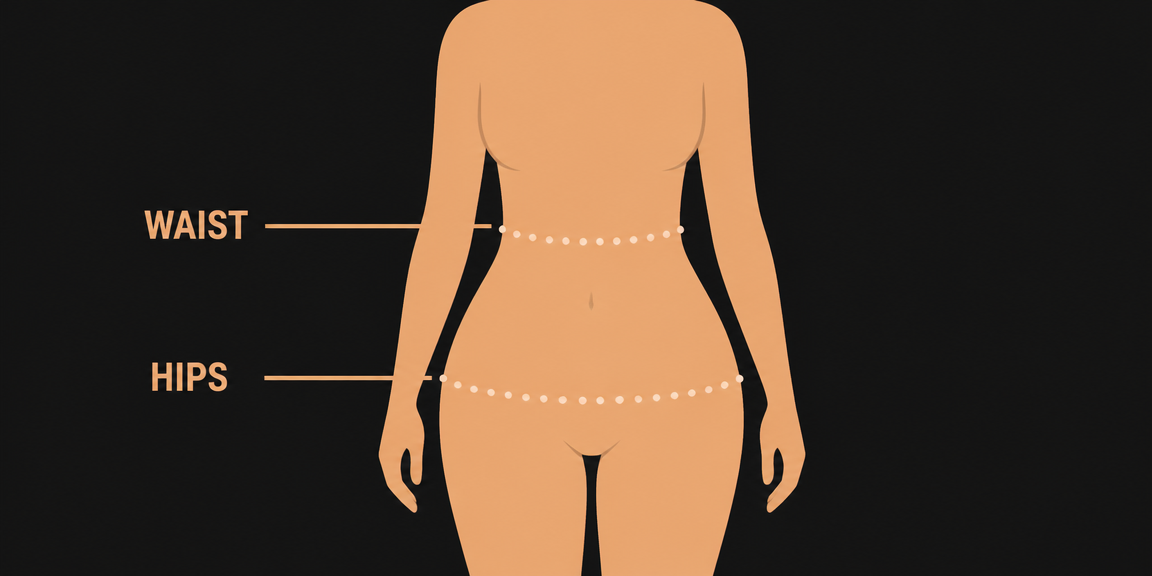
Illustration style reference: Google Image Search
- Waist: narrowest point, above the hip bones and below the ribs. Exhale gently; don't suck in.
- Hips: widest point around the buttocks. Keep the tape level all the way around.
Calculator
Enter measurements in the same unit (cm or in).
Threshold for men: ratio > 0.9 indicates increased cardiovascular risk.
Coronary Artery Calcium (CAC) Score
A low-dose CT scan that quantifies calcified plaque in the coronary arteries, reported as an Agatston score.
Who should consider it?
- Men > 40 with borderline or intermediate 10-year ASCVD risk
- Women > 45 with borderline or intermediate 10-year ASCVD risk
- Patients undecided about starting a statin after shared decision-making
How the score informs therapy
- CAC = 0Statin can usually be deferred (re-assess in 5–10 yr)
- CAC 1–99Favors statin, especially if ≥ 55 yr
- CAC ≥ 100Initiate or intensify statin therapy